Production audit progression
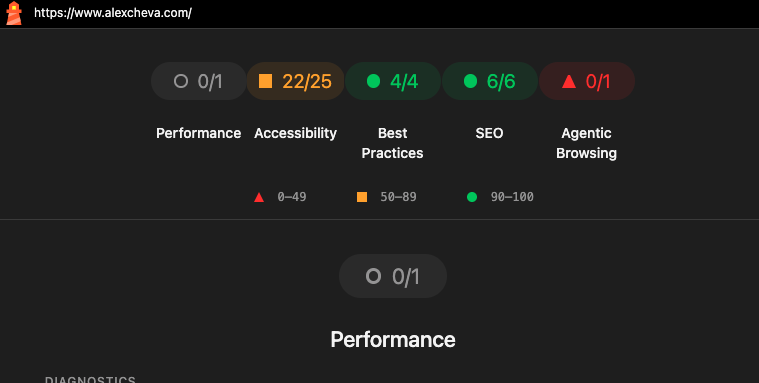
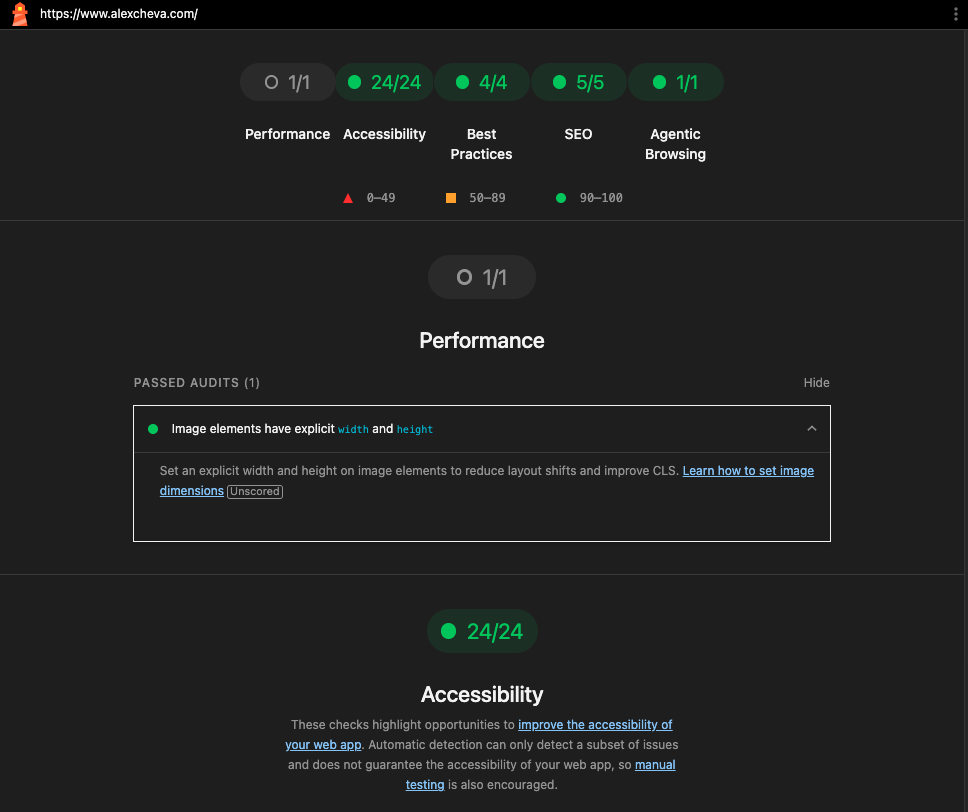
Iteration resolved the remaining automated accessibility and agentic-browsing checks while keeping best-practice and SEO validation green.
Live iteration
This portfolio is a living product that brings together my engineering experience, project storytelling, interactive visuals, and design sensibility in one cohesive web experience.
The goal was to create a portfolio that feels personal and expressive while still being fast, accessible, and easy to scan. It uses reusable content sections, project detail pages, experience pages, animated image treatments, atmospheric backgrounds, and responsive layouts.
The main challenge has been balancing personality with clarity. The site should feel memorable, but the work still needs to stay readable, recruiter-friendly, and easy to navigate.
Working on the portfolio as a product has been a useful reminder that presentation is part of UX. Strong content, visual hierarchy, performance, accessibility, and interaction design all shape how people understand the work.
Measured iteration
I used Lighthouse and browser performance tooling throughout development to catch accessibility gaps, eliminate layout movement, reduce interaction latency, and validate each iteration instead of treating optimization as a final cleanup pass.
Iteration resolved the remaining automated accessibility and agentic-browsing checks while keeping best-practice and SEO validation green.
Cumulative Layout Shift improved from 0.10 to 0, while Interaction to Next Paint dropped from 56 ms to 16 ms in the captured local tests.
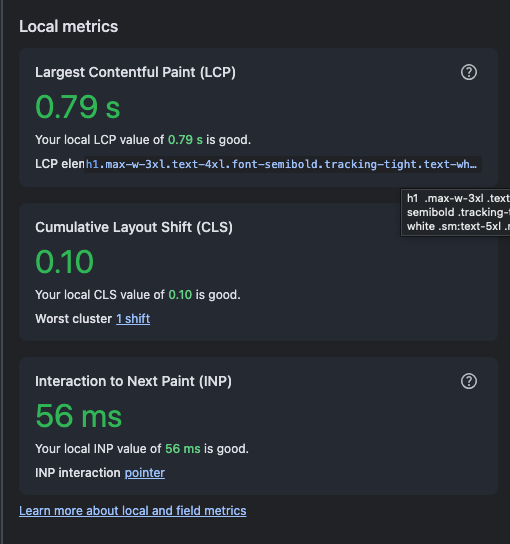
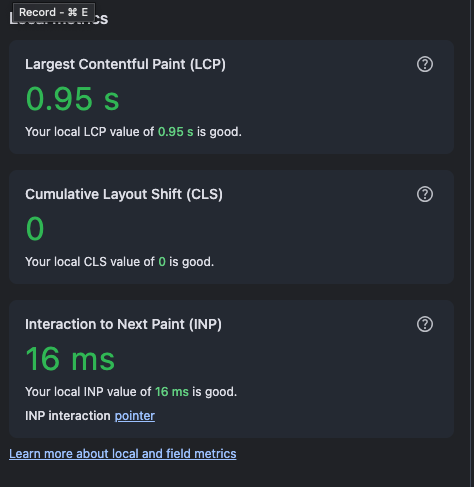
Lighthouse and local metrics are point-in-time lab measurements and can vary with environment, device, and test conditions. Read the optimization case study.
Because it demonstrates product thinking, frontend architecture, visual design, responsive implementation, and iterative polish. It is also a live example of how I turn a vague creative direction into a usable interface.
I focused on making the site feel cohesive: reusable page patterns, atmospheric but readable visuals, strong content hierarchy, and a navigation flow that supports both quick scanning and deeper reading.
Connect
I'm always happy to chat about frontend engineering, accessibility, React, or interesting opportunities.